Executive Interview Process: When Too Many Rounds Drive Away Top Candidates
Excessive executive interviewing is weakening candidate interest, damaging company reputations, and exposing problems in how consequential decisions get made. Senior-level hiring requires thoughtful evaluation. However, an extended hiring process can become a warning sign when additional rounds do not produce new information or move the decision forward.
Over the past year, and with increasing frequency during the last six months, executive clients engaged in active job searches have raised the same concern. Interview processes are becoming longer, less disciplined, and harder to justify.
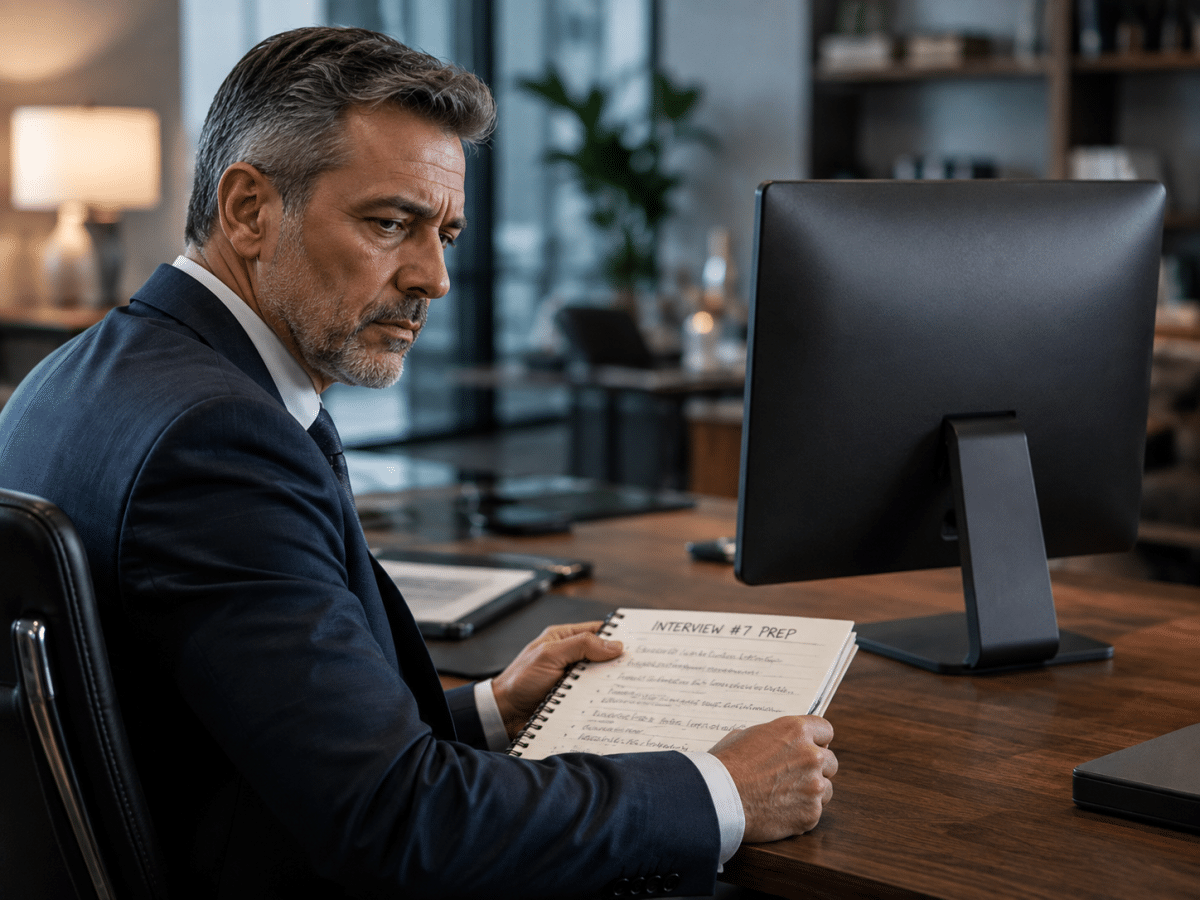
One client was receiving serious interest from three companies. One process had reached seven interviews, another nine, and the third twelve. What should have felt encouraging had become exhausting, disruptive, and increasingly revealing. Another executive invested substantial time in multiple interviews, creating multiple business case solutions for them, only to have the company stop communicating and completely ghost him.
The circumstances were different, but both companies revealed the same failure. One prolonged the process without a clear decision standard. The other accepted a significant investment of the candidate’s time and then disappeared. That is not simply an inefficient search. It is a leadership signal about how the organization handles accountability and decision-making.
Senior leaders are not resisting rigorous evaluation. They expect difficult questions, multiple stakeholders, and serious scrutiny. What they are watching is whether each additional conversation produces useful evidence or simply postpones accountability.

What Is an Executive Interview Process?
An executive interview process is the structured series of conversations, assessments, and decision steps companies use to evaluate senior leadership candidates. A strong process tests leadership capability while giving candidates confidence in the organization’s decision-making approach.
There is no universal number of interviews that defines an excessive process. The issue is not the number of conversations but whether each stage has a clear purpose, evaluates a specific capability, and helps the company reach a decision.
The Candidate Is Not the Only One Under Review
Companies often conduct executive searches as though candidates are the only party being evaluated. That may be true during the first conversation, but it is rarely true by the seventh or twelfth.
As the process expands, candidates begin examining the company more closely. They notice whether leaders agree on the mandate, whether anyone has authority to decide, and whether interviewers are testing different capabilities or repeating questions because the organization itself is not aligned or organized.
Korn Ferry has documented candidates progressing through as many as nine interview rounds. A lengthy process does not automatically indicate poor management, but it gives candidates more opportunities to determine whether the role, expectations, and decision structure are settled.
By that point, they are no longer evaluating only the position; they are evaluating the organization. Executives are assessing whether leaders communicate clearly, whether responsibilities are defined, and whether decisions move forward when important information is available.
More Meetings Can Produce Less Clarity
An executive appointment may require separate conversations about board relationships, financial judgment, investor communication, transformation experience, succession, or operational leadership. Different stakeholders may have legitimate areas to assess, and a serious candidate should expect that level of scrutiny.
That is thoughtful due diligence. Repeating the same career questions across an expanding group of interviewers is not.
Staffing Advisors reports that six or more interviews have become common in many organizations. Its analysis connects excessive participation with insufficient planning, fear of making a poor hire, and the pursuit of broad agreement among people who may not share the same understanding of the role.
Before another conversation is scheduled, the company should be able to state what material issue remains unresolved, why the next interviewer is qualified to assess it, and how the answer could change the decision. If the hiring team cannot answer those questions, another meeting is not adding rigor. It is masking the absence of alignment.
Additional interviews can be valuable when each conversation has a defined purpose. The issue is not the number of meetings. The issue is whether each stage provides new evidence.
Every additional interview should answer a material question that could change the decision. Otherwise, it is not diligence. It is delay.
When Does an Executive Interview Process Become Too Long?
| Healthy Process | Warning Signs |
|---|---|
| Each interview has a clear purpose | Multiple interviews repeat the same questions |
| Decision-makers are identified early | New stakeholders appear late |
| Timeline is communicated | Timeline keeps changing |
| Feedback is coordinated | Candidates receive vague updates |
| Evaluation criteria are consistent | Requirements shift during the process |
A Drawn-Out Process Changes the Candidate Pool
Companies may believe an extended process demonstrates selectivity. Strong executives may read it differently. What the company sees as caution can begin to look like indecision, internal misalignment, or disregard for the candidate’s time.
Many senior candidates are already leading companies, functions, teams, and major initiatives. Some are considering several credible opportunities. Others were approached and were not actively planning a move. Their continued interest should not be assumed simply because they agreed to enter the process.
Delay does more than risk losing a preferred candidate. It changes the competitive landscape of the search by influencing which executives remain available. The executives with the strongest alternatives may leave first, while the company continues gathering information it should already know how to evaluate.
Candidate Experience Becomes Company Reputation
An executive search reaches beyond the immediate appointment. Today’s finalist may later become a customer, investor, board prospect, strategic partner, adviser, referral source, or competitor.
Executive markets are smaller than many companies realize. A poorly managed interview process can influence whether a candidate recommends the company, considers a future opportunity, refers another executive, or speaks positively about the organization.
A candidate who experiences a poorly managed process may not only decline the role. They may influence how other executives, advisors, investors, and industry contacts view the organization.
Spencer Stuart emphasizes the professional and personal investment required of executive candidates, along with the importance of open and timely communication. Silence, shifting expectations, repeated questions, and newly introduced decision-makers do not communicate rigor. They communicate that the company may not know how, or may not be willing, to decide.

Fix the Decision Before Adding Another Interview
A disciplined process begins before the first candidate enters it. The CEO, board, CHRO, and other essential participants should agree on why the role exists before interviews begin, what the executive must accomplish, which capabilities matter most, and what evidence is needed to make a decision.
They should also define the reporting relationship, decision authority, available resources, and first-year priorities. Without that alignment, each interviewer may be assessing a different version of the position, and the resulting disagreement is then mistaken for a need to gather more information.
The result is often not a better hiring decision, but conflicting opinions that create more uncertainty.
Russell Reynolds Associates advises companies to establish decision rights in advance, including who provides input, who makes recommendations, and who gives final approval. Broad participation can strengthen a decision, but it cannot replace accountability.
Candidates should know the anticipated stages, who they will meet, what those conversations will assess, and when the company expects to decide. When the process changes, the company should explain why. That is not administrative courtesy. It is evidence of how the organization leads when circumstances become complicated.
How Executives Should Evaluate the Hiring Process
Executive candidates do not need to participate passively. Early in the search, ask how many stages are anticipated, what each stage will assess, and who owns the final decision.
Ask whether the position is approved and funded, whether the leadership team agrees on the first-year goals, and whether the scope or reporting relationship remains unsettled. As the process continues, ask what still needs to be learned, what the next conversation is expected to establish, and consider whether their answer actually appears to impact the hiring decision.
Specific answers indicate a designed process. Vague explanations, repeated questions, moving requirements, and newly introduced decision-makers indicate something else. Candidates should treat that information as seriously as anything they learn about the role itself.
Questions Executives Should Ask During the Process
- How many stages are expected?
- What capability will each conversation evaluate?
- Who owns the final decision?
- What remains unresolved at this stage?
- Has the role scope or reporting structure changed?
Companies Are Showing Candidates How They Lead
An executive search should test judgment, experience, leadership capability, and readiness for the mandate. It should not become a place where organizational uncertainty is concealed behind another meeting.
Throughout the process, companies reveal how authority operates, how disagreement is resolved, whether people’s time is respected, and who accepts responsibility for difficult decisions. Those impressions can strengthen a candidate’s interest or destroy it.
This is not an argument for speed at the expense of evidence. It is an argument for discipline. When a hiring team cannot explain what it still needs to learn, the problem is no longer candidate evaluation. It is the company’s own decision process.
A company hiring someone to make difficult decisions should demonstrate that it can make one itself.
Final Takeaway: What Executives Should Learn From the Hiring Process
An excessive interview process is not only a test of your patience. It is evidence about how the company defines authority, respects time, handles uncertainty, and makes difficult decisions. Pay attention to what the process is telling you.
- Clarify the process early: Ask how many stages are anticipated, what each conversation will assess, and who owns the final decision.
- Question added rounds: When another interview appears, ask what remains unresolved and how the next conversation could impact the hiring decision.
- Track changes in the mandate: Shifting priorities, reporting relationships, or success measures may indicate that the company has not aligned on the role it is trying to fill.
- Treat communication as leadership evidence: Delayed updates, vague explanations, and silence after significant investment are not minor administrative failures. They show how the organization behaves when accountability matters.
- Know when to step back: A strong opportunity should withstand reasonable scrutiny from both sides. If the company cannot explain its process or respect your investment, continued participation may no longer be the right decision.
Executive candidates should not ignore what they learn simply because they want the role. The interview process is often the clearest preview they will receive of how the company actually leads.
A disciplined executive search protects more than the hiring decision. It protects candidate trust, leadership credibility, and the company’s reputation in the executive market.

Evaluating Your Next Executive Opportunity?
The interview process is often the first real indication of how an organization operates. The right opportunity is not only about the role itself. It is also about understanding the leadership environment, decision process, and organizational fit.
Executive Waypoint helps senior leaders assess opportunities, strengthen positioning, and evaluate whether a role, company, and leadership environment align with their next career move.
Frequently Asked Questions
How many interviews are normal for an executive role?
There is no fixed number. Senior roles may require multiple conversations because of board involvement, stakeholder alignment, and leadership evaluation. The concern begins when additional rounds do not provide new information.
Why do executive hiring processes take so long?
Executive searches may extend because of confidentiality, internal approvals, compensation discussions, or stakeholder involvement. A disciplined process should still communicate expectations and maintain momentum.
How can executives evaluate a company’s hiring process?
Executives can evaluate clarity of communication, decision ownership, timeline discipline, and whether each interview stage has a clear purpose.
How many interview rounds are too many for an executive role?
There is no fixed number because executive searches often involve boards, stakeholders, and complex evaluations. The concern begins when additional rounds do not provide new insight or move the decision forward.
What are signs of a poorly managed executive hiring process?
Repeated questions, unclear timelines, changing expectations, unclear decision ownership, and limited communication can indicate that the organization has not aligned internally.